
Flatbed vs. Lowbed Trailer: Choosing the Best for Africa
ZW Group| 2025-3-10
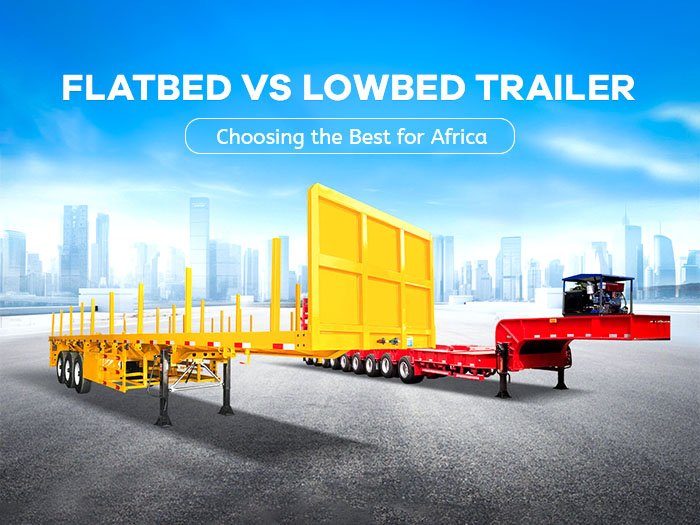
Introduction
In Africa’s thriving construction and logistics sector, choosing between a flatbed trailer and a lowbed trailer can greatly impact efficiency, safety, and cost. While both trailer types are designed to handle heavy loads and challenging terrains, each offers specific advantages depending on the project’s scale and cargo type. Understanding the differences between flatbed and lowbed trailers will help you select the best equipment for your African construction project and ensure smooth operations from transport to delivery.
Africa’s infrastructure development is expanding rapidly, with regional projects demanding reliable heavy-haul solutions that can support loads ranging from 20 to over 80 tons. Selecting the right trailer type not only affects operational efficiency but also compliance with road safety and axle load regulations, which differ among African countries such as Kenya, Nigeria, and South Africa. This article explores key distinctions, practical applications, and buying insights to guide your decision.
Whether moving mining equipment through rough terrain or delivering prefabricated structures to urban sites, the proper trailer configuration will determine total transportation cost, travel safety, and schedule performance. Let’s break down which trailer configuration truly suits Africa’s diverse construction logistics.
Understanding Flatbed and Lowbed Trailers
What Is a Flatbed Trailer?
A flatbed trailer is an open platform without sidewalls or a roof, typically measuring 12–13.6 meters long and capable of carrying cargo between 20 and 40 tons. Its flat structure allows easy loading from any direction, making it popular for transporting construction materials, machinery parts, and containerized goods. Typical deck heights are about 1.5 meters from the ground, which suits standard road gradients.
What Is a Lowbed Trailer?
A lowbed trailer, also called a lowboy or low-loader, features a lowered deck height measuring about 0.6–1.0 meters above the ground. This design enables the transportation of oversized and overweight cargo exceeding 40 tons, such as excavators, bulldozers, and industrial modules. The low center of gravity improves stability and reduces rollover risk, especially important for navigating uneven African roads or mountainous routes.
Key Structural Differences
While both trailers share multi-axle configurations, their structural dynamics differ significantly. Flatbeds prioritize simplicity and volume utilization, whereas lowbeds focus on ground clearance and load balance. Understanding these mechanical distinctions helps determine which configuration should be deployed depending on terrain and equipment height regulations.
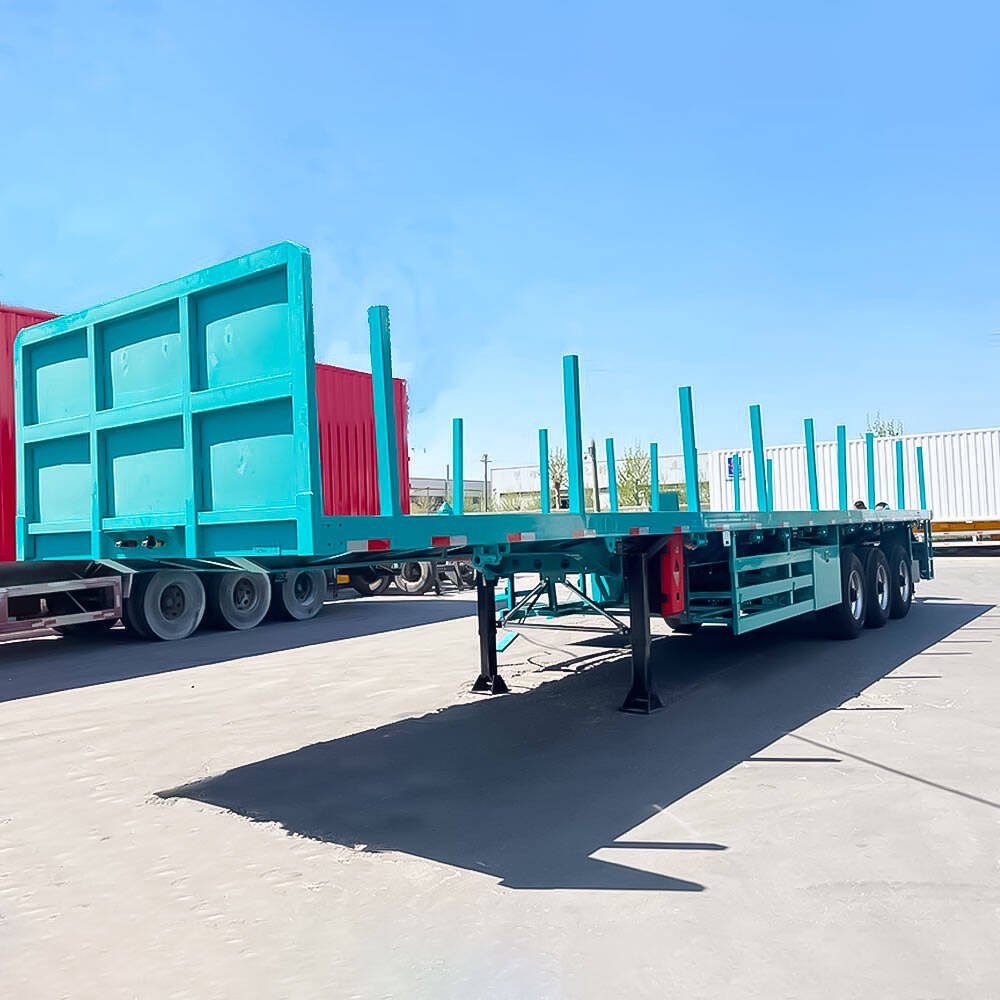
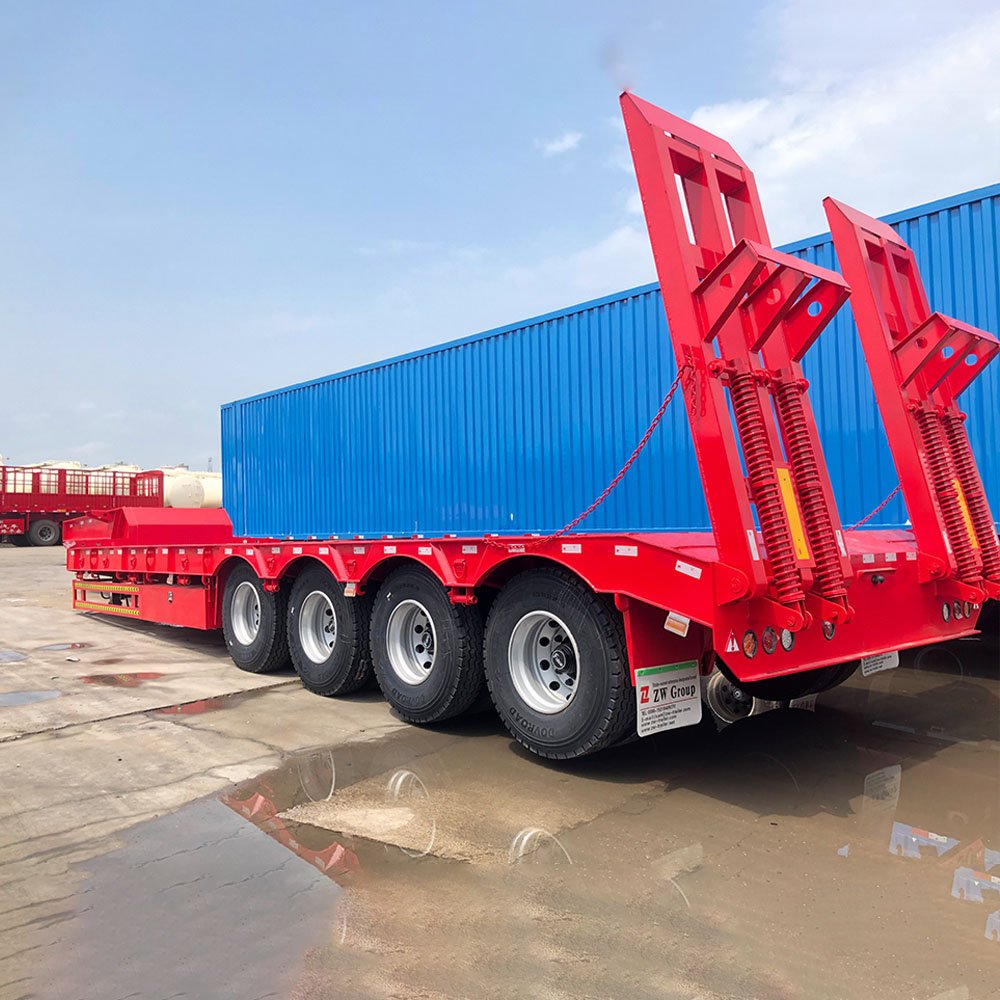
Comparison Analysis: Flatbed vs. Lowbed Trailers
The following table provides an at-a-glance comparison between flatbed and lowbed trailers to assist in technical selection and cost-benefit evaluation:
| Feature | Flatbed Trailer | Lowbed Trailer |
|---|---|---|
| Deck Height | ≈ 1.5 m | ≈ 0.8 m |
| Load Capacity | 20–40 tons | 40–80 tons |
| Loading Method | Forklift or crane, side access | Ramp or hydraulic system, rear access |
| Best For | Regular goods, flat materials, medium-weight machinery | Heavy equipment, tall structures, irregular cargo |
| Price Range | Baseline investment (100%) | +25–40% higher than flatbed |
From the comparison above, flatbed trailers deliver versatility at lower acquisition costs, ideal for frequent site deliveries and multi-type cargo. In contrast, lowbeds offer superior safety for oversized cargo but at higher capital and maintenance costs. For projects transporting heavy machinery weekly or monthly, the investment in a lowbed can pay off through reduced damage and downtime.
Application Scenarios in African Construction Logisticss?
When Flatbed Trailers Are Ideal
Flatbeds suit contractors moving bulk construction materials such as steel bars, pre-cast panels, and timber. Many regional hauliers use them for deliveries under 40 tons per trip, often across distances of 100–400 km. They can handle multiple loading points per day, ensuring flexible operations and faster turnover.
When Lowbed Trailers Excel
Lowbeds are selected for cross-border and heavy-duty applications—such as moving excavators to mining sites in Zambia or tower cranes to infrastructure developments in Nigeria. Their low platform ensures compliance with height limits (usually max 4.5 m overall) and enhances safety on rough or steep roads prevalent in rural territories.
Typical Industry Usage Ratio
Based on regional transportation demand, about 60–70% of African construction fleets rely on flatbeds for standard materials, while approximately 30–40% utilize lowbeds for specialized loads or public projects. Many logistics operators operate mixed fleets to balance project requirements and cost efficiency.
Procurement and Selection Guide
Choosing between a flatbed and a lowbed should be based on five primary dimensions: load weight, cargo height, terrain, route distance, and regulatory clearance. Below is a structured selection guide summarizing practical considerations:
| Selection Dimension | Recommended Trailer Type | Decision Threshold |
|---|---|---|
| Cargo Weight | Flatbed: ≤ 40 tons Lowbed: > 40 tons | Based on axle capacity of 8–12 tons each |
| Cargo Height | Flatbed: ≤ 2.8 m Lowbed: ≤ 4.5 m | Comply with regional road clearance |
| Terrain Condition | Flatbed: urban and paved routes Lowbed: rugged or off-road terrain | Gradient > 8% favors lowbed |
| Operational Frequency | Flatbed: multi-trip daily Lowbed: dedicated monthly transport | Estimate utilization ≥ 70% for cost efficiency |
For operators with mixed needs—such as construction firms managing both material supply and site relocation—leasing or owning one lowbed alongside two to three flatbeds often achieves optimal balance. Maintenance cycles differ as well: flatbeds require inspection every 5,000 km, while heavy-load lowbeds typically need closer checks every 3,000 km due to stress on suspensions and axles.

Common Misconceptions and FAQs
Is a lowbed always better for construction equipment?
Not necessarily. Although lowbeds handle heavier machinery, overusing them for light freight below 20 tons increases fuel consumption by 10–15% and reduces fleet utilization. Always align equipment type with expected load range.
How long does delivery of custom trailers take?
Standard flatbeds can be delivered within 2–4 weeks, while customized lowbed trailers with hydraulic ramps or modular axles may require 6–8 weeks. Extra time is often needed for certification and cross-border transport approvals.
What are the key inspection points before purchase?
Buyers should check five key items:
- Axle capacity and configuration (3–5 axles standard)
- Frame material thickness (typically 6–8 mm high-strength steel)
- Brake system compliance with EBS or ABS
- Deck surface coating and anti-corrosion treatment
- Manufacturer support for spares and after-sales service
Are there specific standards applicable in Africa?
While no continent-wide regulation exists, most countries align with ISO 3449 or SAE J560 standards for braking and electrical connections. Operators should also verify conformity with local axle load limits—often 10–12 tons per axle in East Africa.
Why Partner with a Specialized Supplier
Navigating specifications, regulations, and operating conditions across Africa demands a supplier experienced in heavy transport solutions. A knowledgeable partner can assist in matching trailer type to cargo profile, verifying compliance, and planning sustainable maintenance cycles of 6–12 months. Consulting early can reduce total cost of ownership by up to 20% across a 5-year operation horizon.
To discuss detailed specifications, request a quotation, or evaluate configuration options for your next project, contact our technical team. We can help you assess:
- Exact payload distribution and axle layout
- Optimal deck height for regional clearance limits
- Custom hydraulic or gooseneck systems
- Estimated delivery cycle and logistics support
- Documentation for local registration and compliance
With tailored guidance, you can select a trailer configuration that maximizes uptime, minimizes regulatory delays, and ensures every African construction project runs safely and efficiently from day one.
📧Email: inquiry@zwgroup-vehicle.com
📱WhatsApp: +86-156-5031-7860
🌍 Website: zwsemitrailer.com