
Flatbed Trailer: Complete Guide to Structure & Applications
ZW Group| 2025-12-1
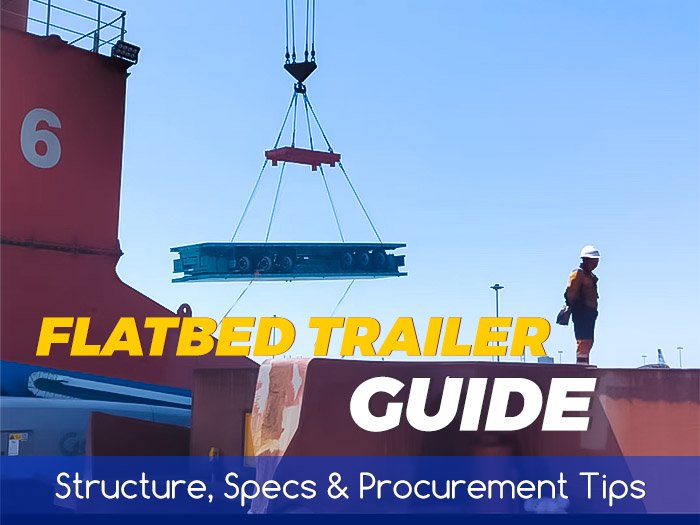
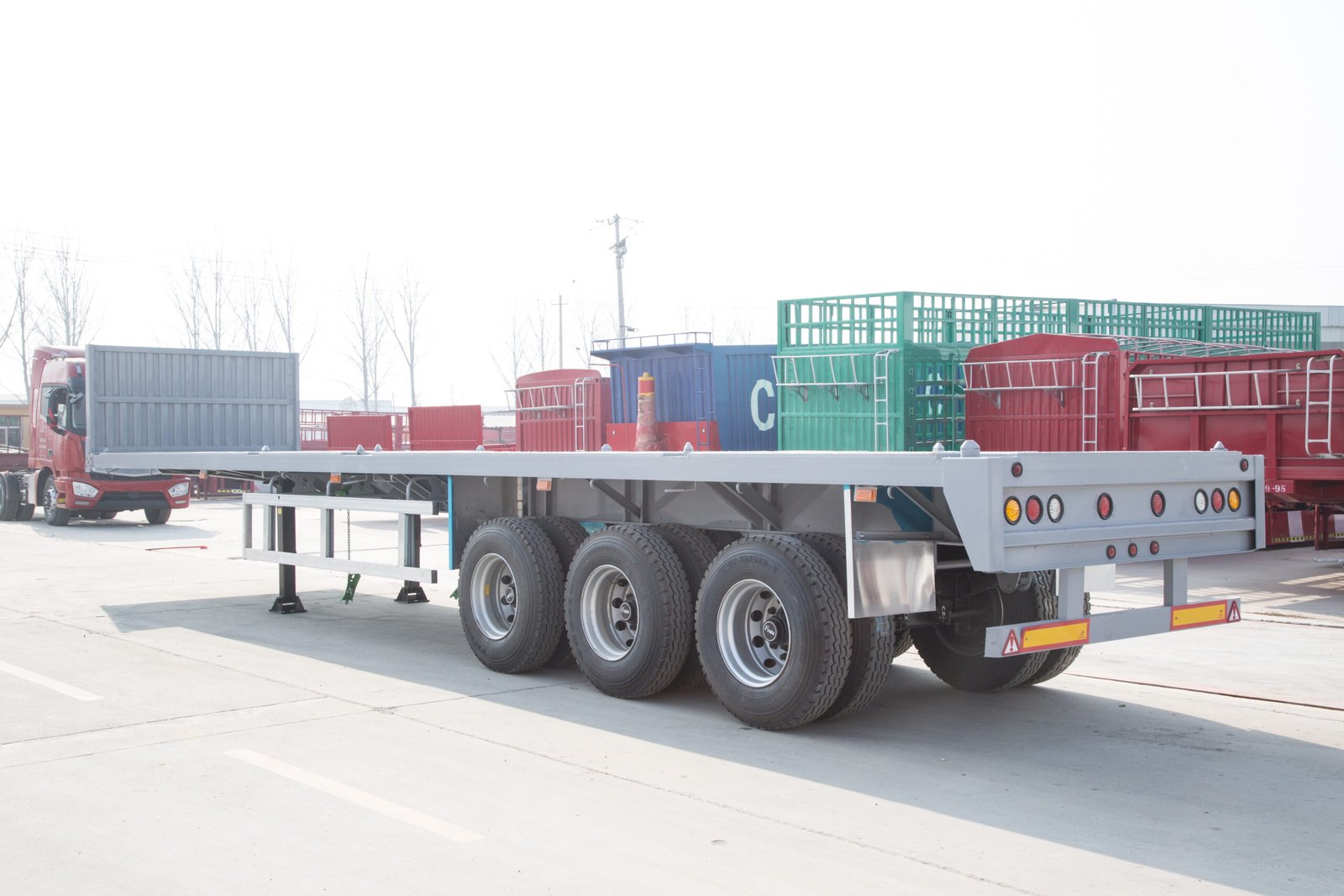
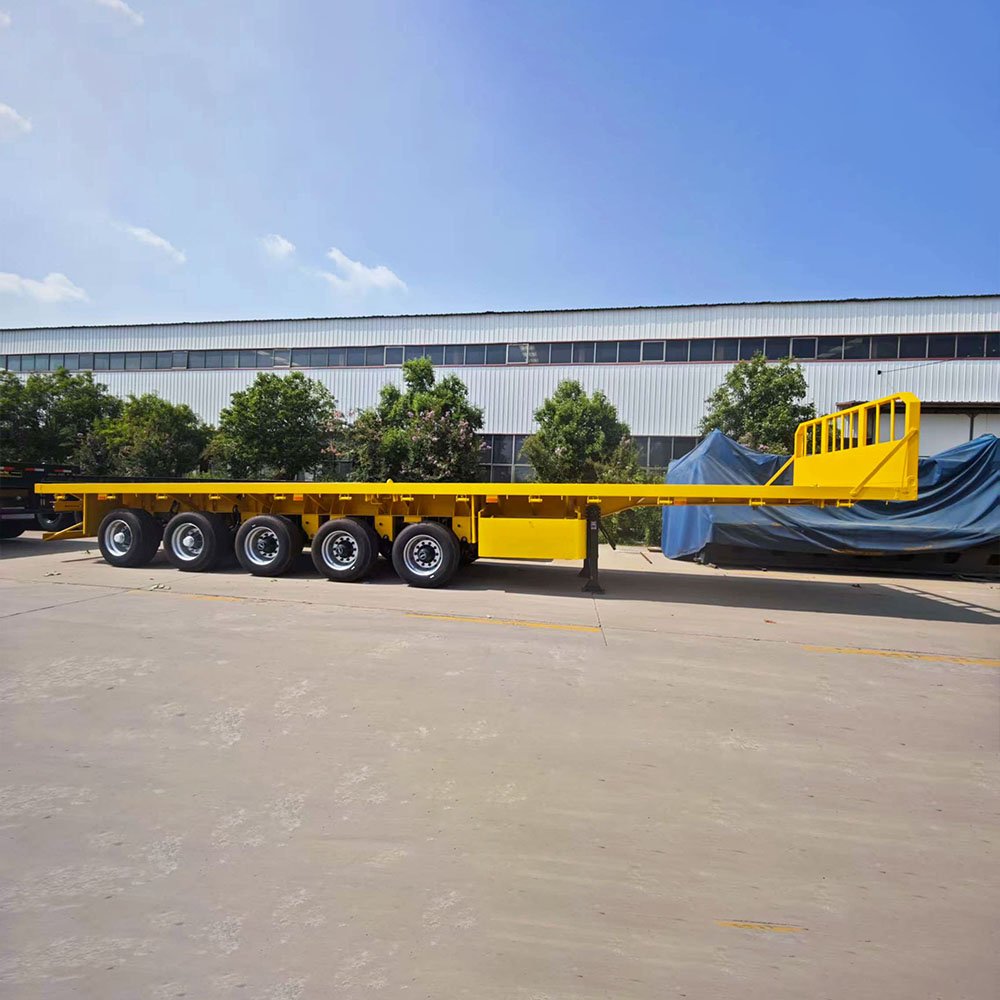
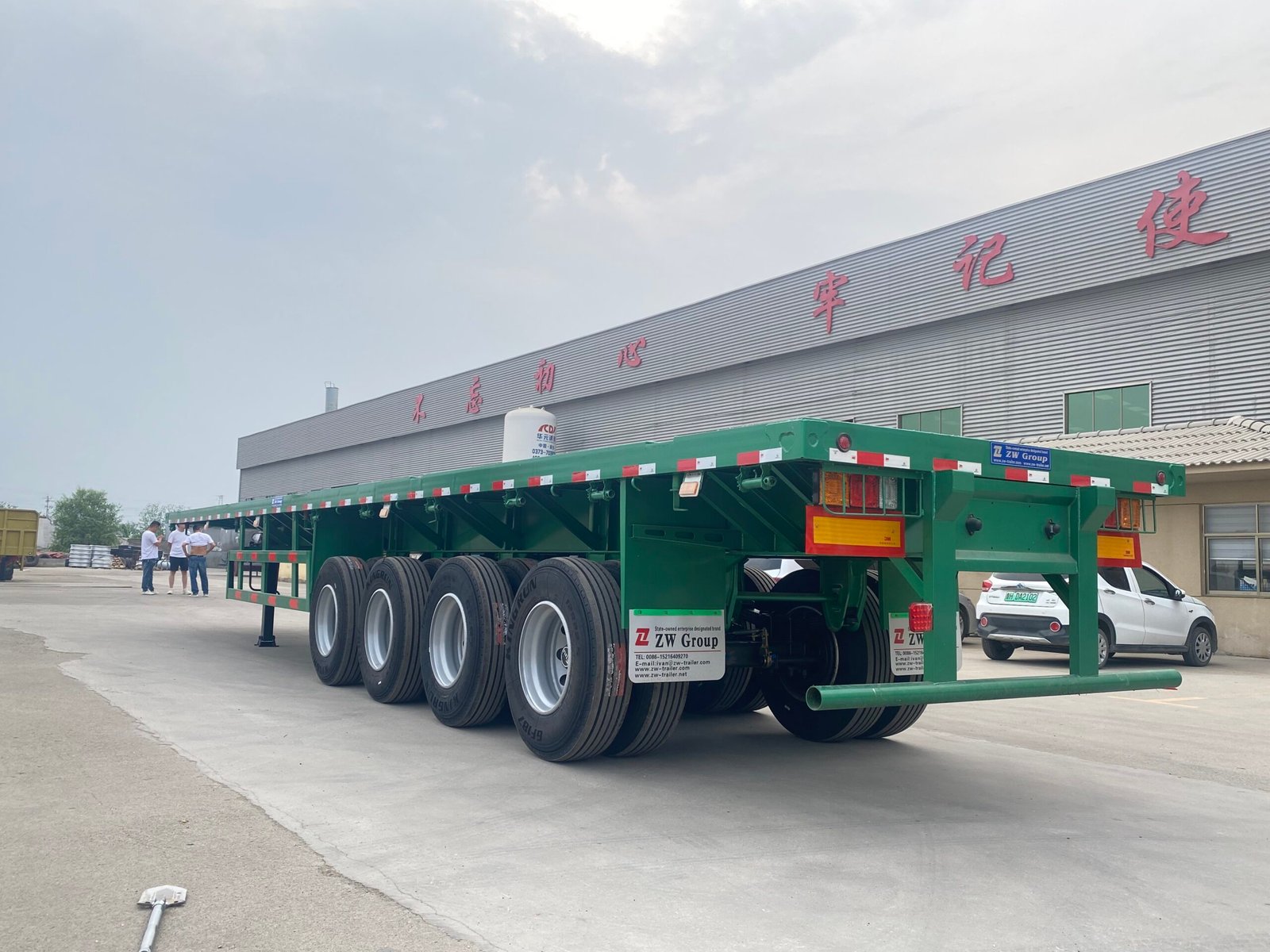
Flatbed trailers are one of the most widely used semi-trailers in global logistics. Their open platform design allows loading from any direction—top, side, and rear—making them ideal for transporting steel materials, machinery, timber, bulk cargo, and containers. This article explains how flatbed trailers are built, their specifications, manufacturing process, maintenance tips, and how to choose the right configuration for your operations.
1. What is a Flatbed Trailer?
A flatbed trailer is a semi-trailer without side walls or a roof. It is mainly used in construction, mining, manufacturing, and port logistics. Thanks to its open structure, cranes and forklifts can load large or irregular goods efficiently.
Common cargo transported:
Steel coils, plates, pipes
Timber & board materials
Machinery and industrial equipment
Palletized goods and bulk cargo
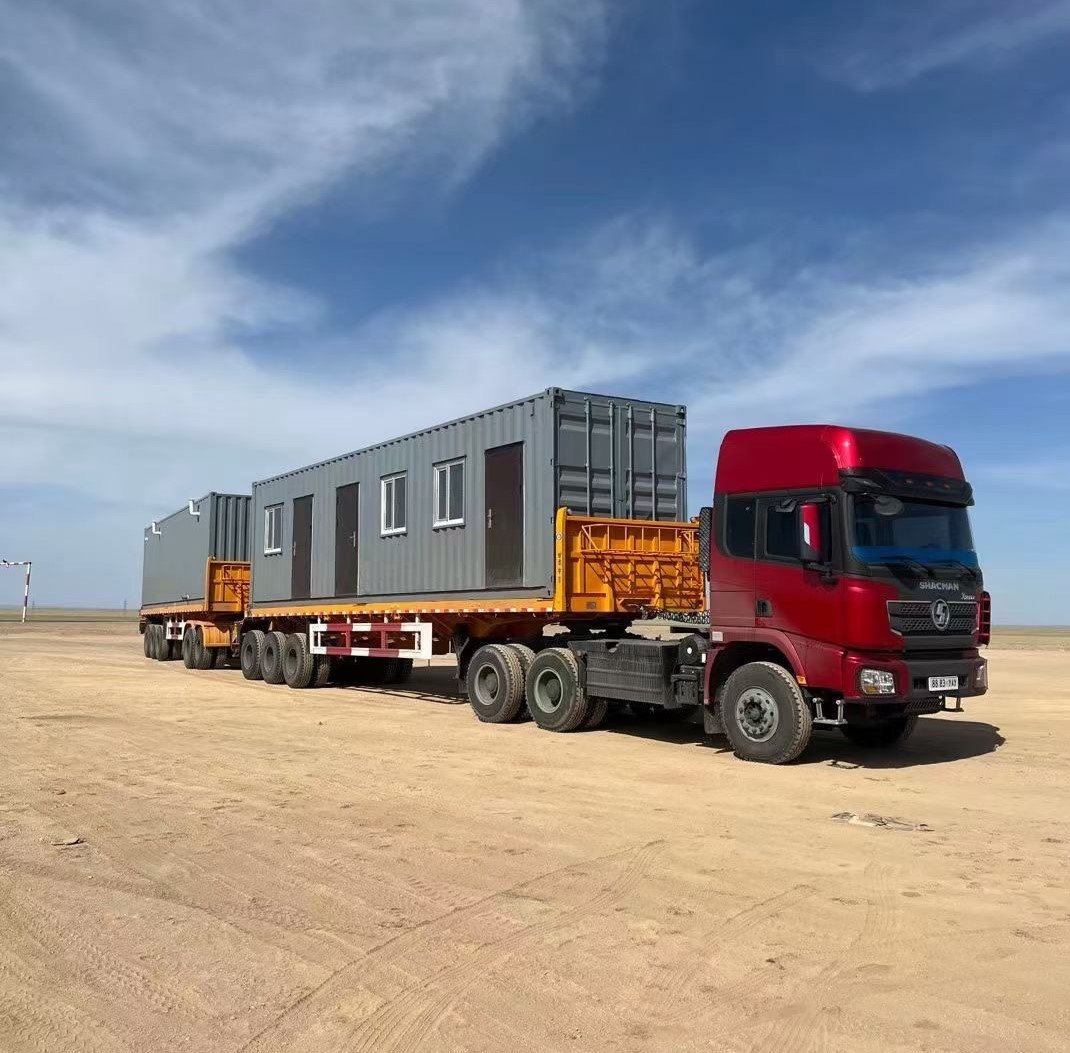
20ft/40ft containers. The design must strictly adhere to ISO standards to ensure global compatibility and secure locking.
2. Flatbed Trailer Structure Overview
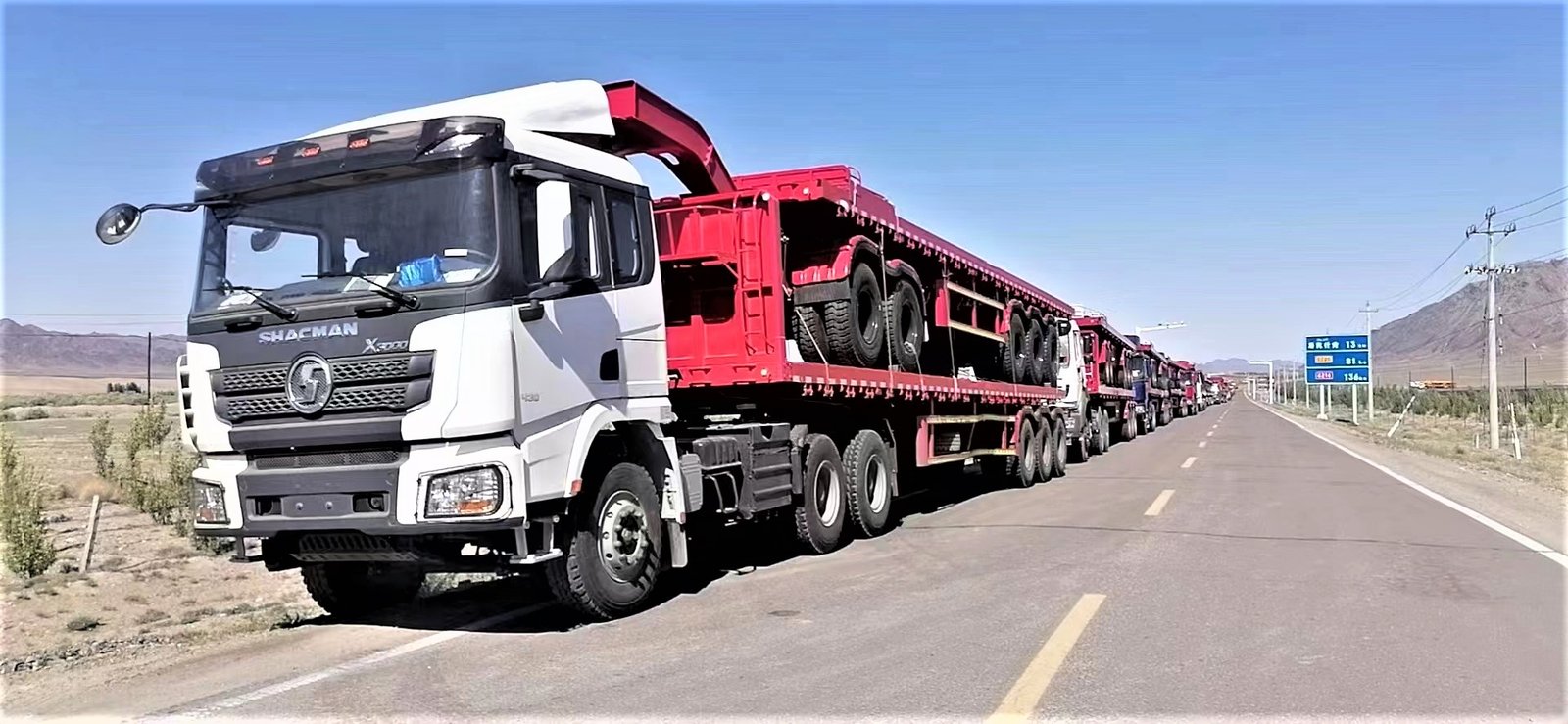
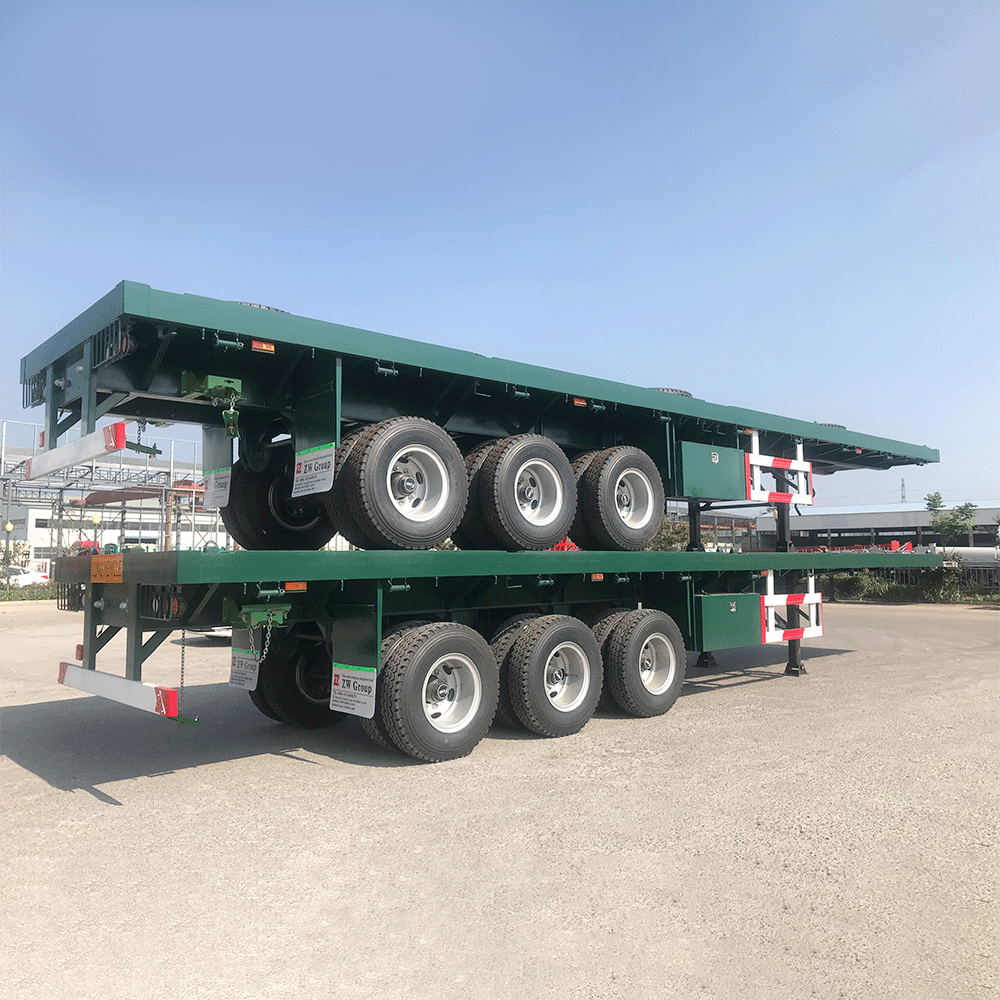
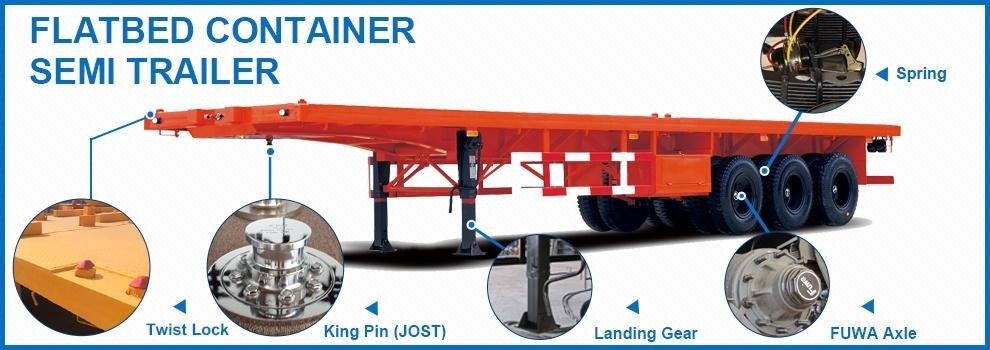
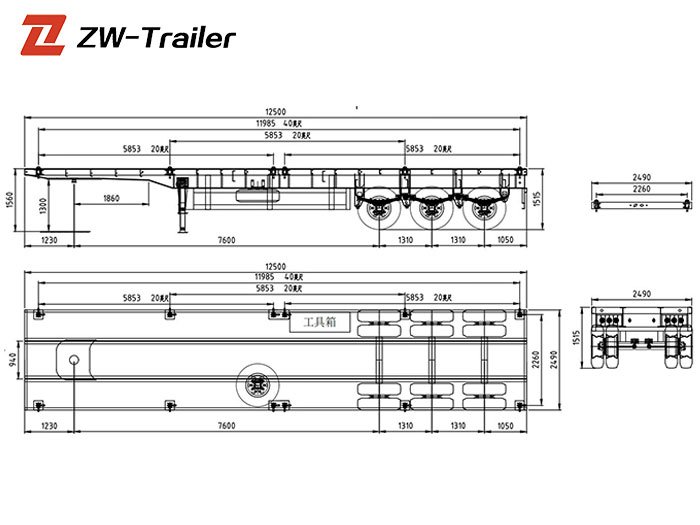
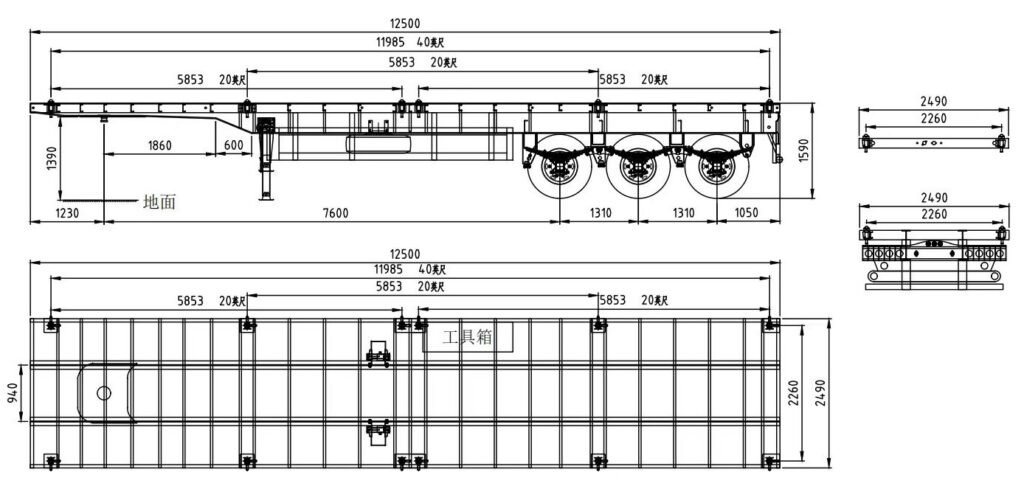
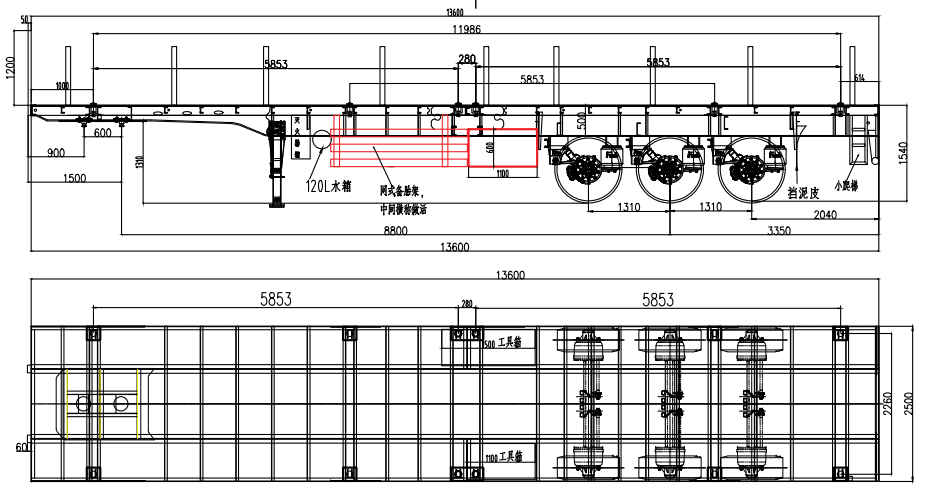
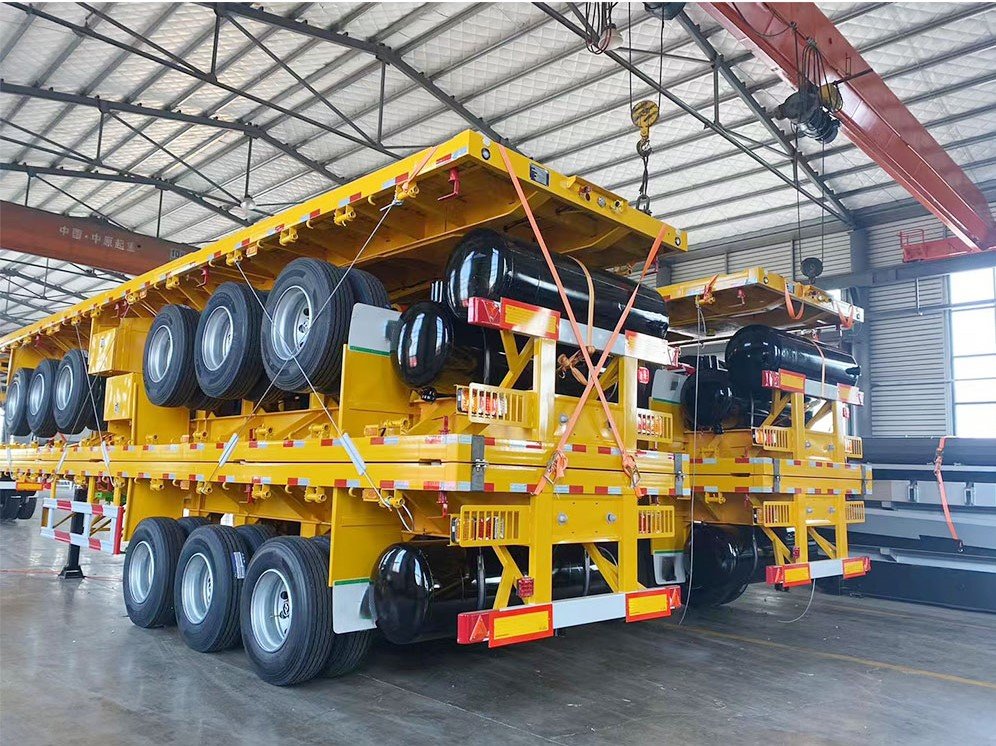
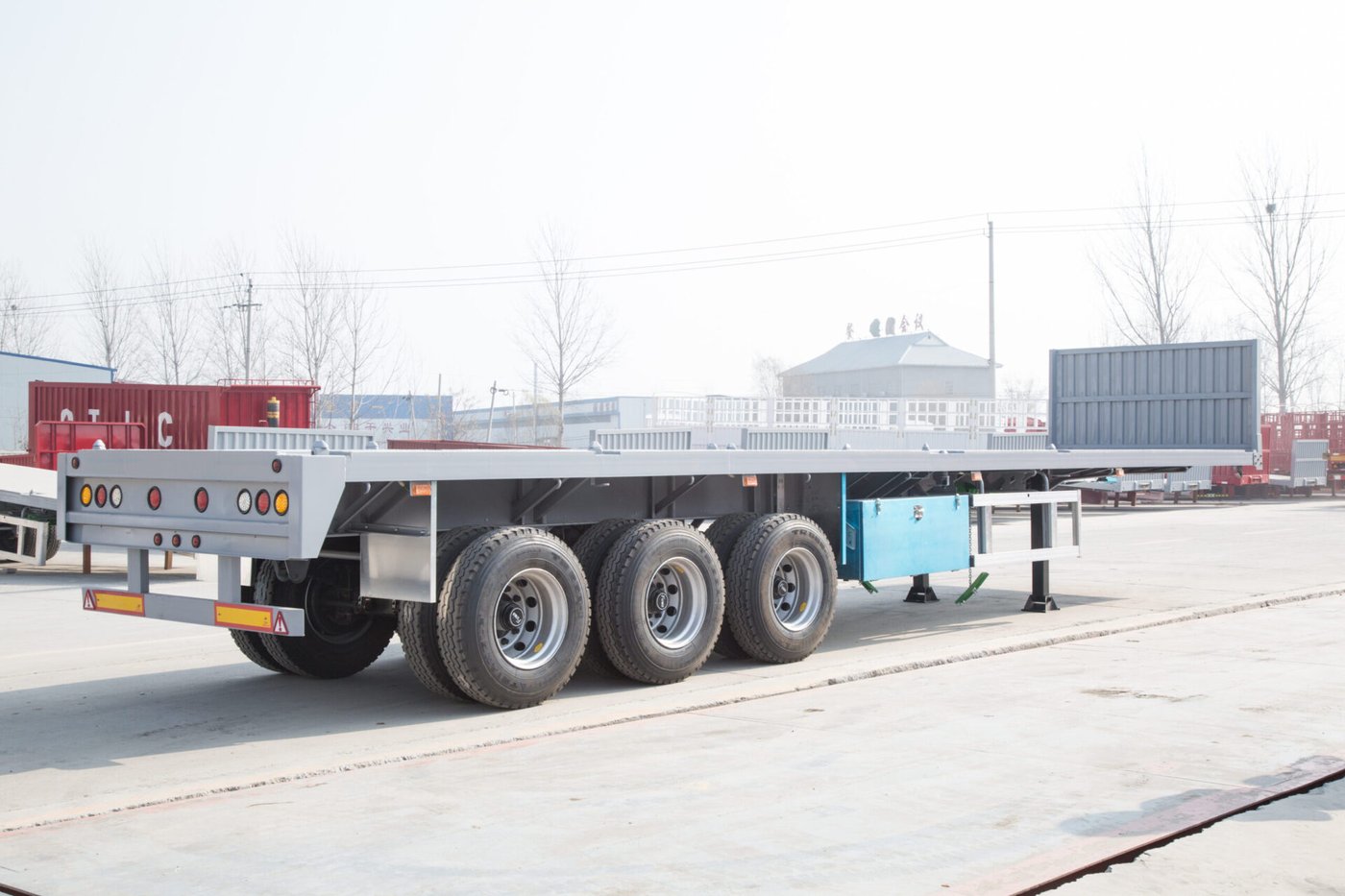
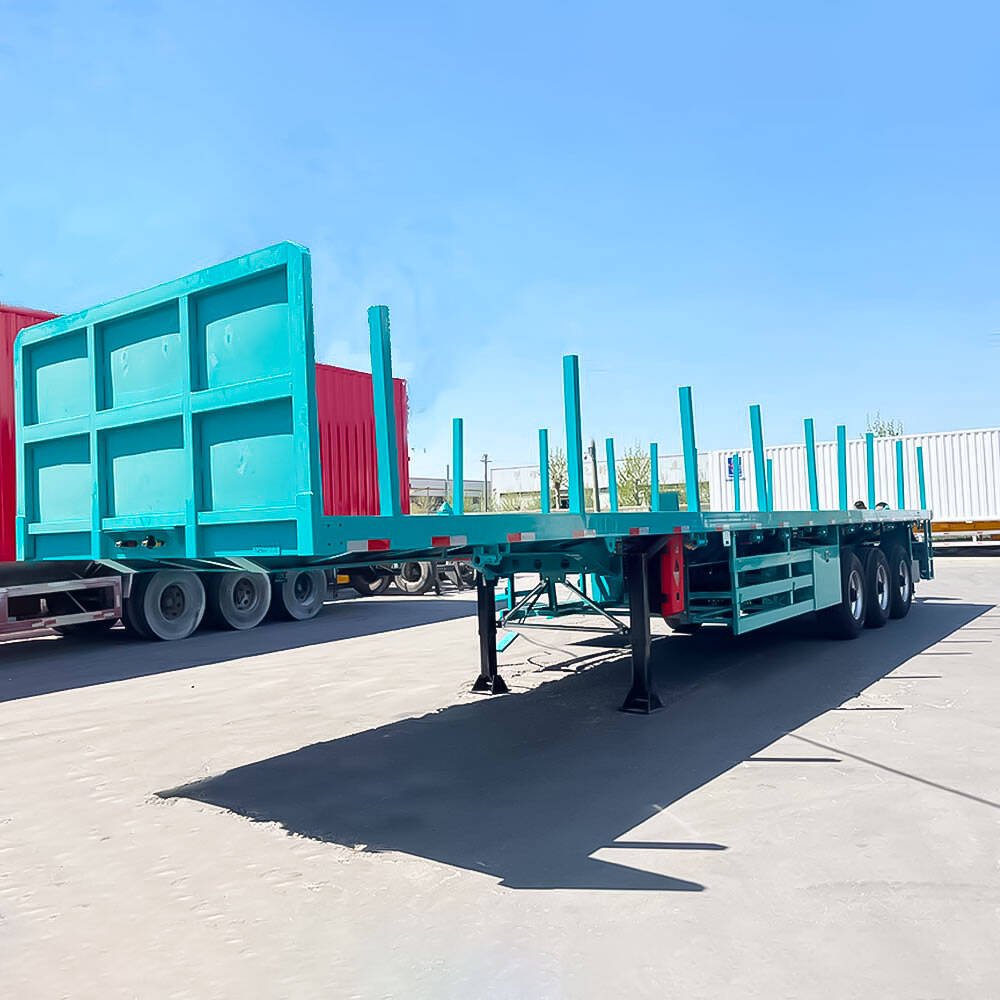
A standard flatbed trailer consists of a main beam, cross beam, side beam, deck floor, suspension system, axles, tires, and braking system.
Key structural highlights:
High-strength Q345/T700 steel beams are used for maximum load performance and structural durability, as defined by global material quality standards.
3mm–5mm checkered/flat steel deck plate
2/3/4 axle configurations for different capacity needs
Mechanical or air suspension optional
ABS/EBS braking systems are mandatory safety features in many export markets to ensure stability and reliable stopping power.
The open design allows oversized cargo that may not fit conventional box trailers.
3. Manufacturing Process
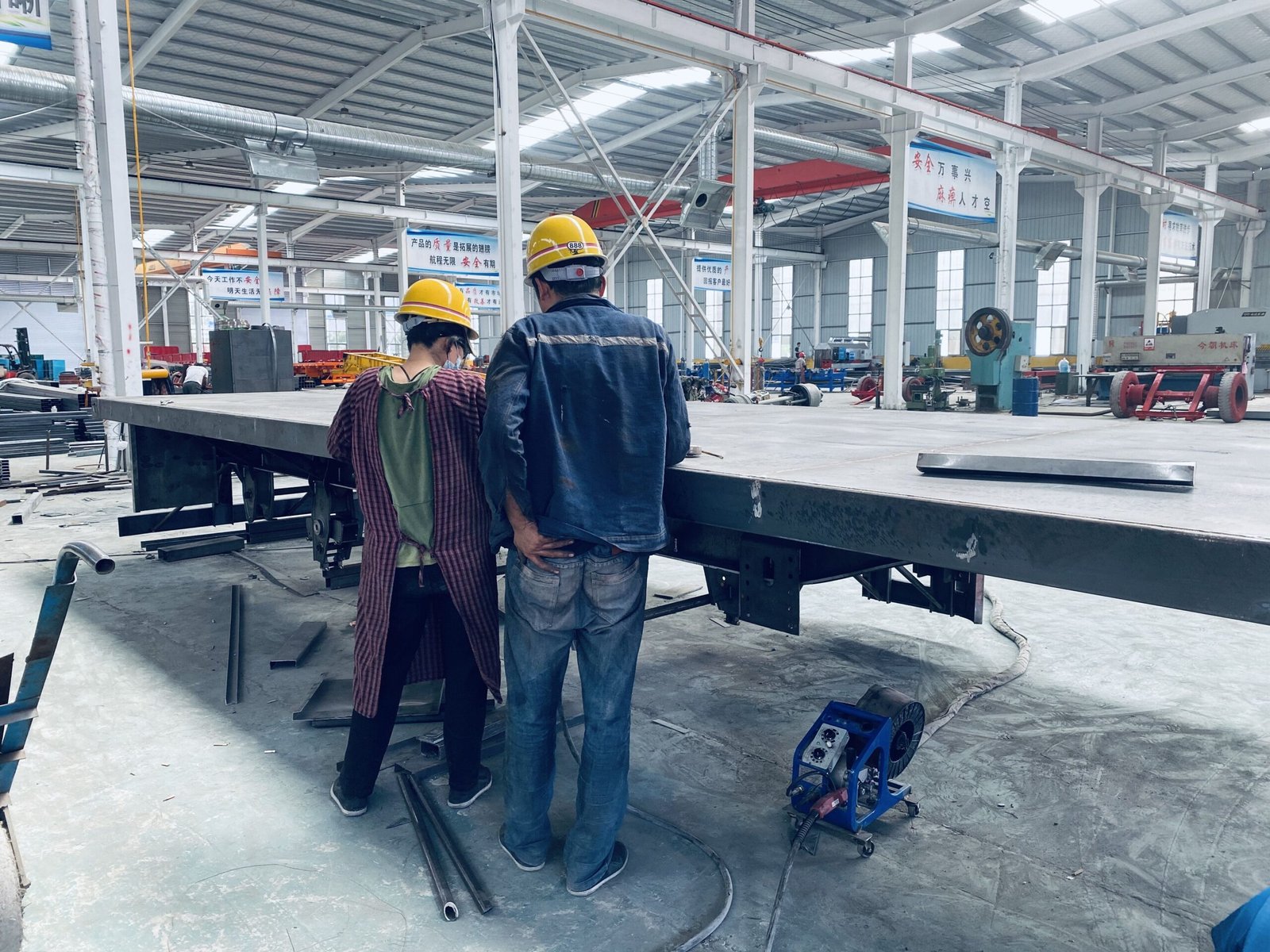
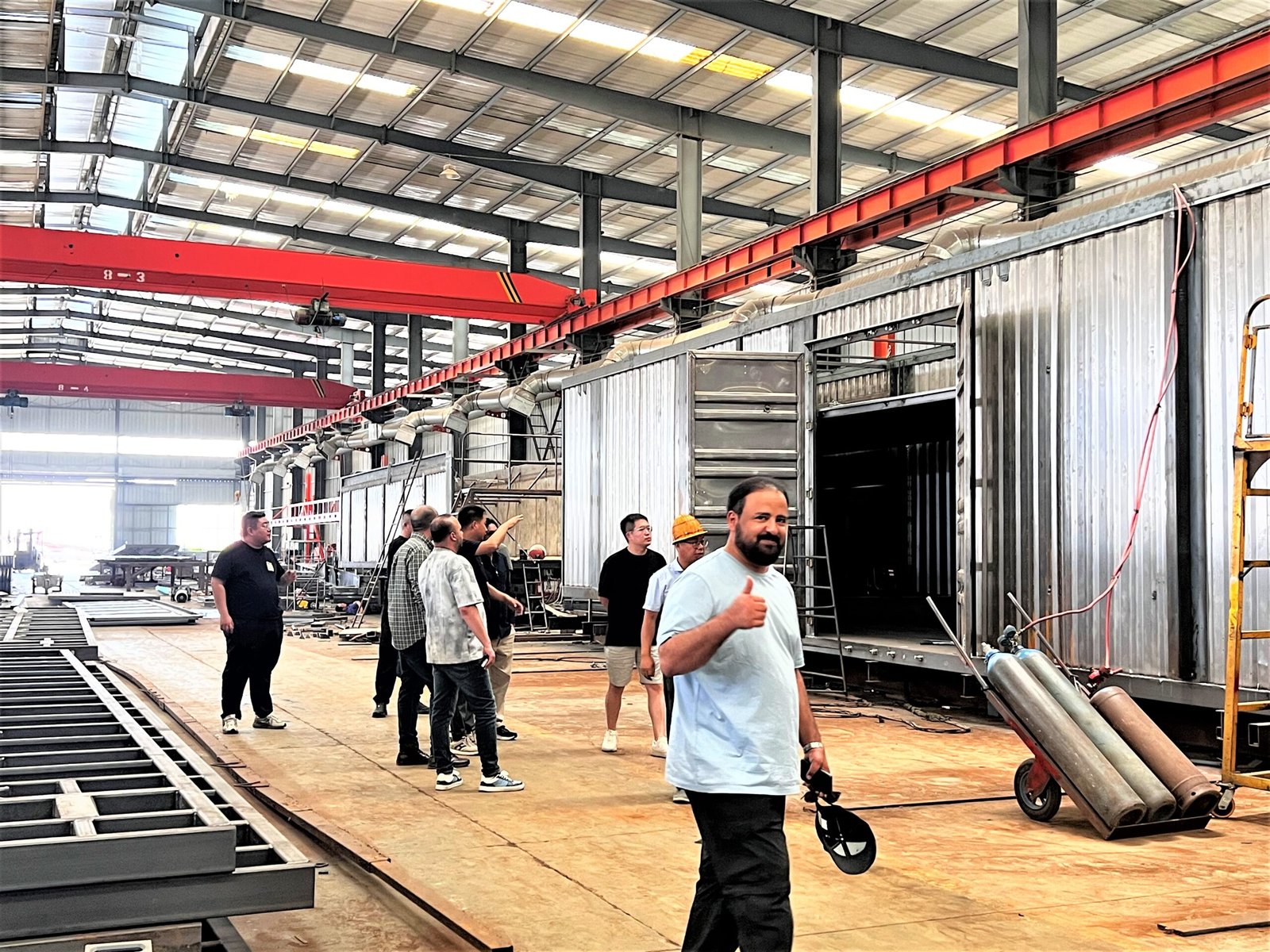
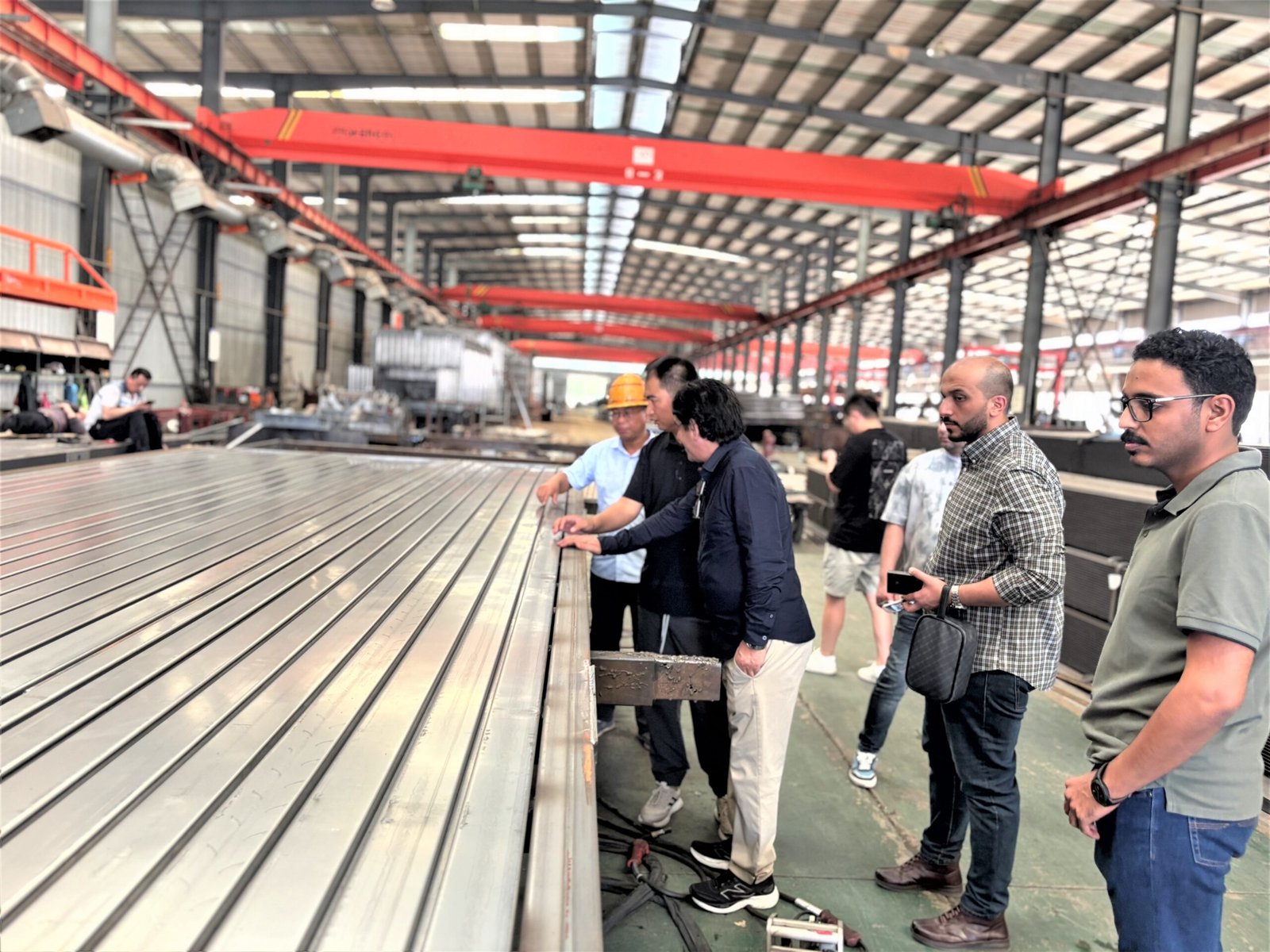
Our production follows strict quality control to ensure durability and long service life:
Steel cutting & beam forming
Main and side beam welding
Shot blasting & anti-rust treatment
Deck floor installation
Axle & suspension assembly
Painting & anti-corrosion coating
Tire assembly & function test
Final inspection & shipment
Consistent welding penetration and coating thickness are monitored to meet export requirements.
4. Specifications & Configurations
| Item | Options |
| Length | 40ft / 45ft / 48ft / 53ft |
| Axles | 2 / 3 / 4 axle |
| Capacity | 30–80 tons |
| Floor | 3–5mm checkered steel |
| Tires | 11R22.5 / 12R22.5 / 315/80R22.5 |
| Suspension | Mechanical / Air / Bogie |
| Brakes | ABS / EBS optional |
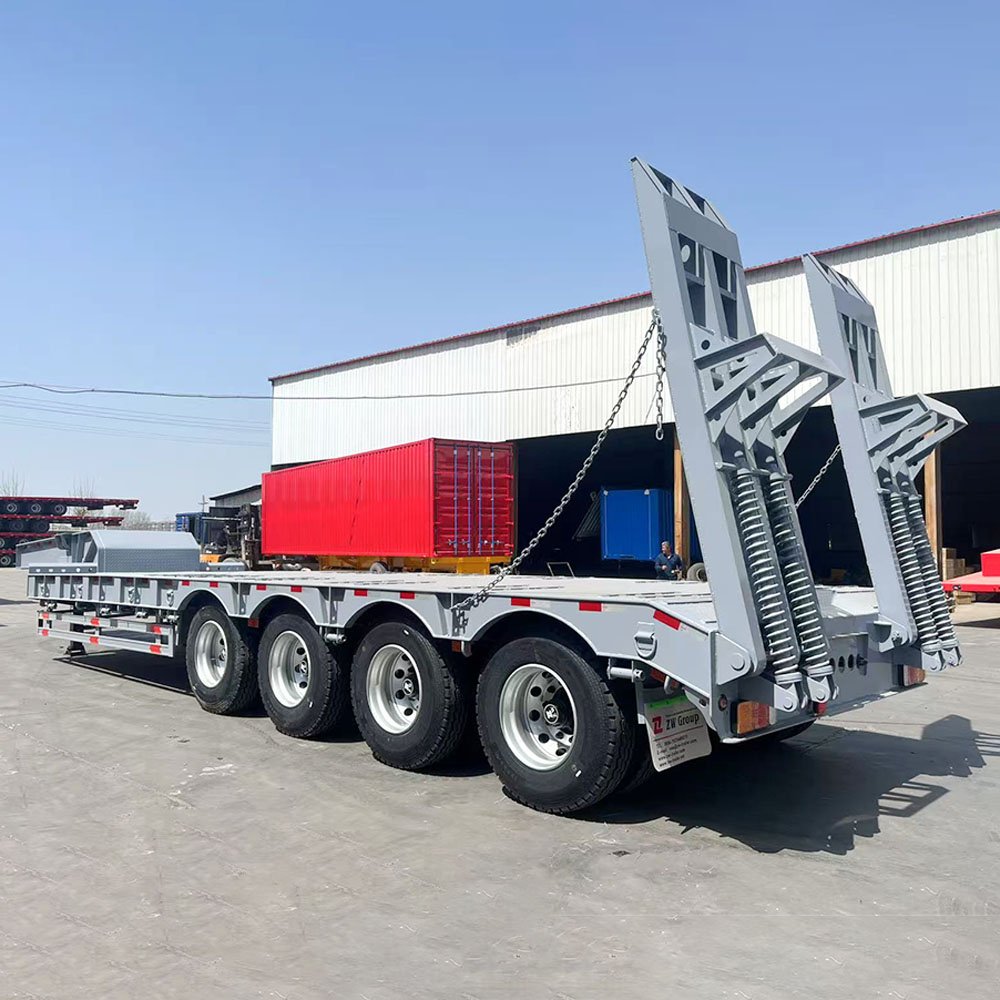
5. Flatbed vs Lowbed Trailer
Flatbed trailers and lowbed trailers are often compared in construction and heavy equipment transport.
➡ View our Comprehensive Lowbed Trailer Guide for a detailed comparison.
6. Applications in Different Industries
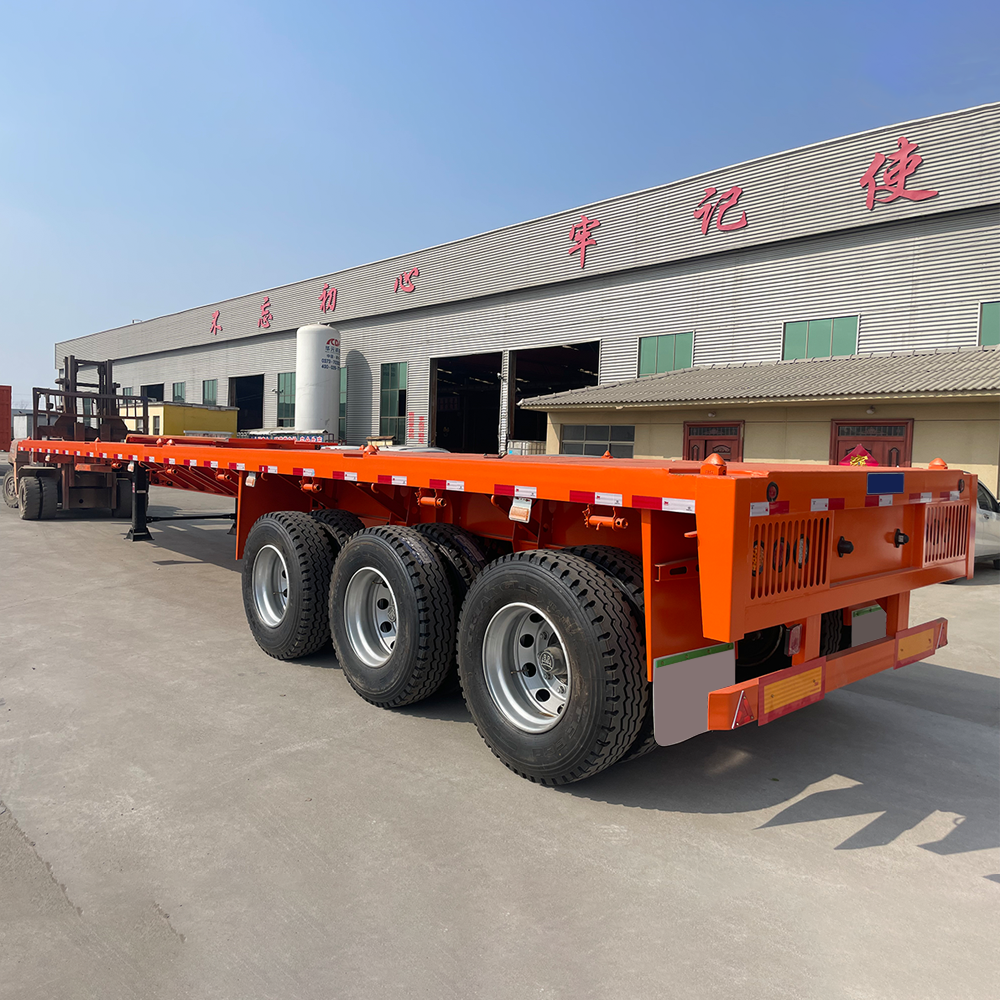
Flatbed trailers are highly adaptable and widely used in:
| Industry | Typical Cargo |
| Construction | Steel, cement bags, scaffolding |
| Mining | Equipment, spare parts |
| Ports & Shipping | Containers, project cargo. The adaptability of flatbed trailers is vital to global supply chain operations and port efficiency. |
| Agriculture | Timber, grain bags, machinery |
7. Flatbed Trailer Maintenance Tips
Powder tankers require simple but regular maintenance:
Check tires & air pressure regularly
Inspect beams and welding joints for cracks
Lubricate suspension & kingpin periodically
Repaint or add anti-rust coating if operating near coast
Keep deck clean to prevent corrosion
Good maintenance increases lifespan and resale value.
8. Why Choose Our Flatbed Trailer?
High-strength steel and fully automatic welding
Shot blasting & rust-proof coating before painting
Multiple suspension and axle configurations
Export experience to Africa, Middle East, Southeast Asia
Professional after-sales support & technical guidance
9. Ready to Procure Your Flatbed Trailer?
You have read the complete technical guide on flatbed trailers, covering structure, manufacturing, and key applications. Utilize this technical knowledge to choose the ideal equipment for your operations.
Explore Our Recommended Products:
Heavy-Duty Flatbed Trailers: View all configurations, drawings, and technical data.
Related Equipment: Lowbed Trailers: For transport of oversized or heavy equipment that exceeds flatbed capacity.
Semi-Trailer Axles & Components: Review our high-strength axles and suspension systems used across our fleet.
10.Contact Us
For pricing, drawings or production schedules, contact our sales team:
📧Email: inquiry@zwgroup-vehicle.com
📱WhatsApp: +86-156-5031-7860
🌍 Website: zwsemitrailer.com