How to Choose Semi-Trailers for African Mining & Logistics?
ZW Group| 2025-3-18
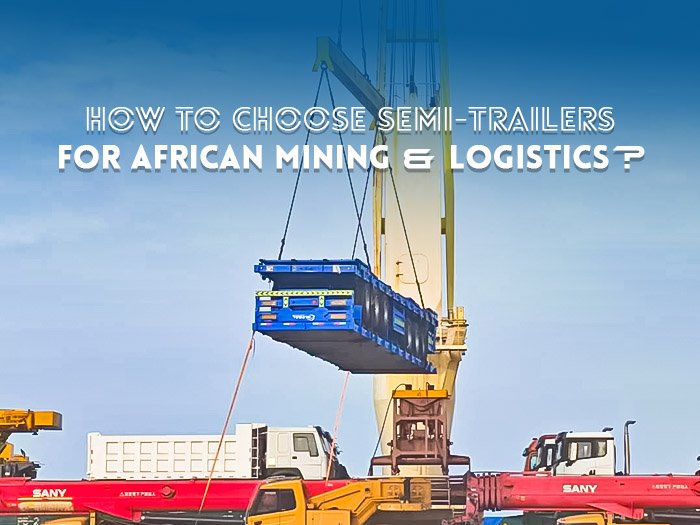
Choosing the right semi-trailers for African mining and logistics operations is critical to ensuring efficiency, durability, and cost-effectiveness across challenging terrains. With the growing demand for reliable transportation in Africa’s mining industry, operators must consider payload capacity, road conditions, and maintenance support when investing in semi-trailers. This guide provides practical insights to help logistics managers and fleet owners make informed decisions that optimize performance and reduce downtime.
Industry Overview: Demand for Semi-Trailers in African Mining and Logistics
Over the past decade, Africa’s mining output has grown by an average of 4–6% annually, with countries such as South Africa, Ghana, and Zambia leading mineral production. This increase has driven a proportional rise in heavy transport demand, especially for semi-trailers capable of carrying 30–60 tons of ore and equipment over distances exceeding 500 km.
Rugged terrain, variable road quality, and long haul distances make trailer specifications crucial. Mining logistics often involve mixed routes combining unpaved tracks and regional highways, requiring reinforced frames, air suspension, and high ground clearance. Suppliers offering configurations that can adapt to multiple axle loads—from 3-axle to 5-axle systems—are increasingly favored in tenders.
In addition to the mining sector, African logistics networks are diversifying. According to common industry forecasts, intra-regional freight demand is expected to grow by about 20–25% between 2025 and 2030, intensifying the need for durable and versatile transport assets. Semi-trailers play a central role in bridging mining production zones with export ports.
To stay competitive, transport operators are not only expanding fleet capacity but also modernizing equipment. They increasingly evaluate trailer acquisitions by total cost of ownership (TCO) over 5–8 years, covering fuel efficiency, serviceability, and spare part accessibility.
Key Selection Criteria for Mining Semi-Trailers
Selecting a suitable semi-trailer involves analyzing several key specifications aligned with site conditions and operational goals. For mining logistics, five evaluation dimensions often determine project success: structural strength, payload efficiency, braking systems, suspension design, and after-sales support.
Mining operations typically demand trailers capable of continuous operation for 12–16 hours per day under loads exceeding 45 tons. Frame material—usually high-tensile steel in the 700–900 MPa range—has a direct effect on structural integrity. Reinforced beam connections and high-performance welds extend trailer lifespan, which typically ranges from 5 to 10 years depending on maintenance intervals of every 6 months.
Another critical factor is suspension type. Air suspension offers smoother rides and protects cargo but may require additional maintenance in dust-heavy areas. Mechanical leaf suspension, although heavier, withstands rough surfaces better. The right choice depends on the proportion of unpaved routes—commonly 40–70% in mining regions.
Below is a comparative summary of common trailer configurations used in African mining logistics:
| Trailer Type | Typical Payload Range | Best Suited Terrain | Maintenance Cycle |
|---|---|---|---|
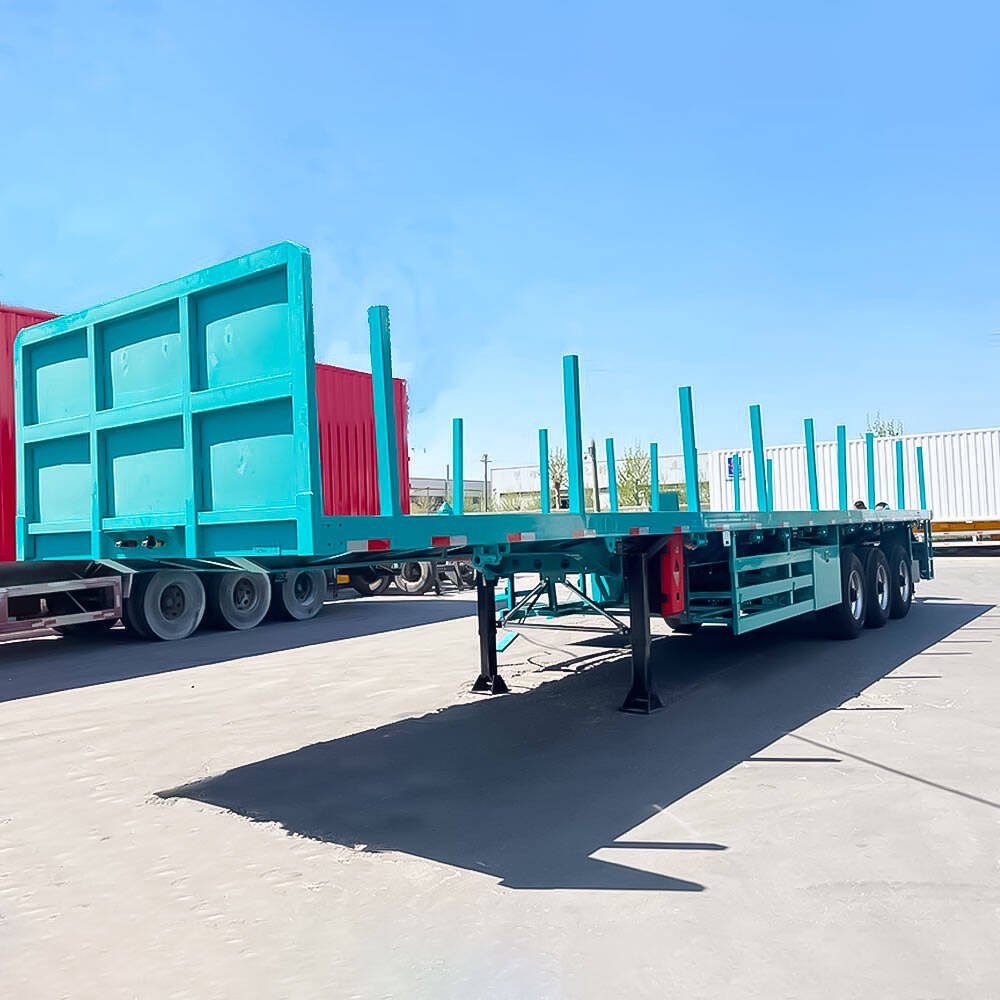
| Flatbed Semi-Trailer | 30–45 tons | Paved roads, mixed routes | Every 8–10 weeks |
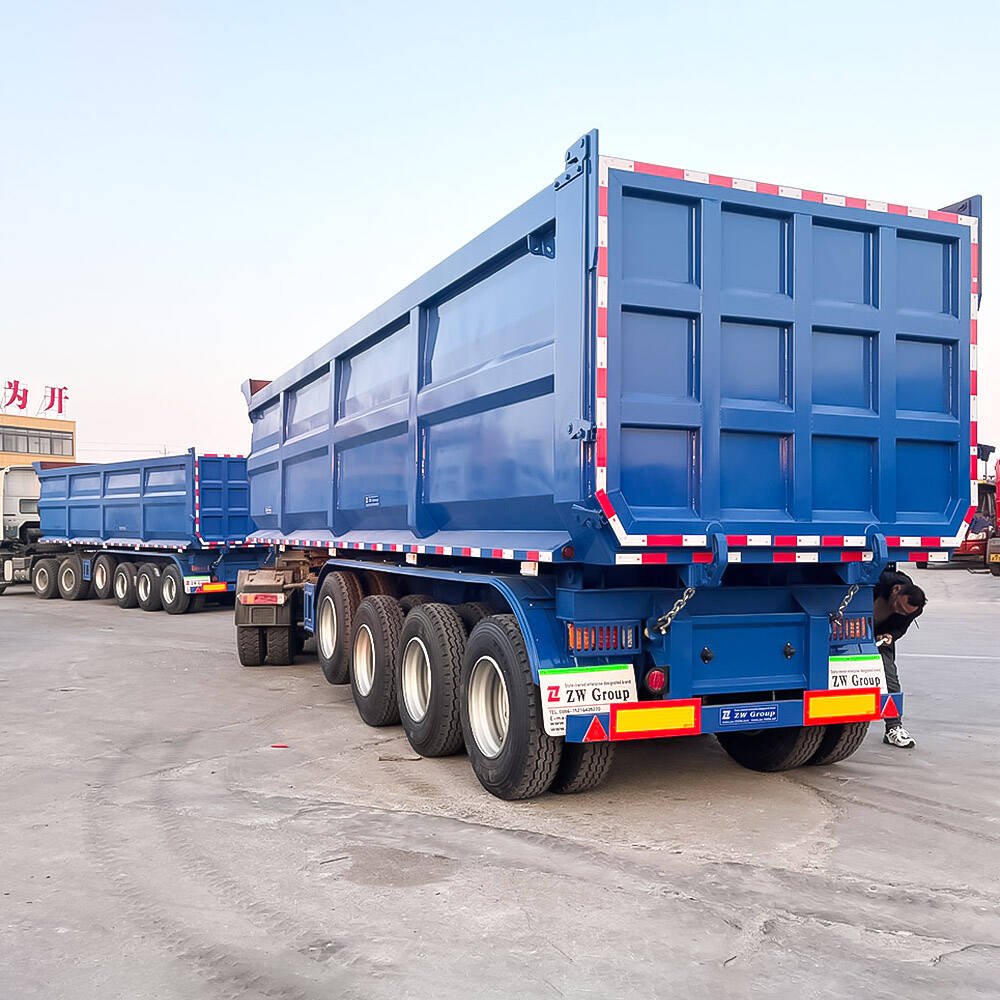
| Side Tipper Semi-Trailer | 35–60 tons | Gravel, mining site | Every 6–8 weeks |
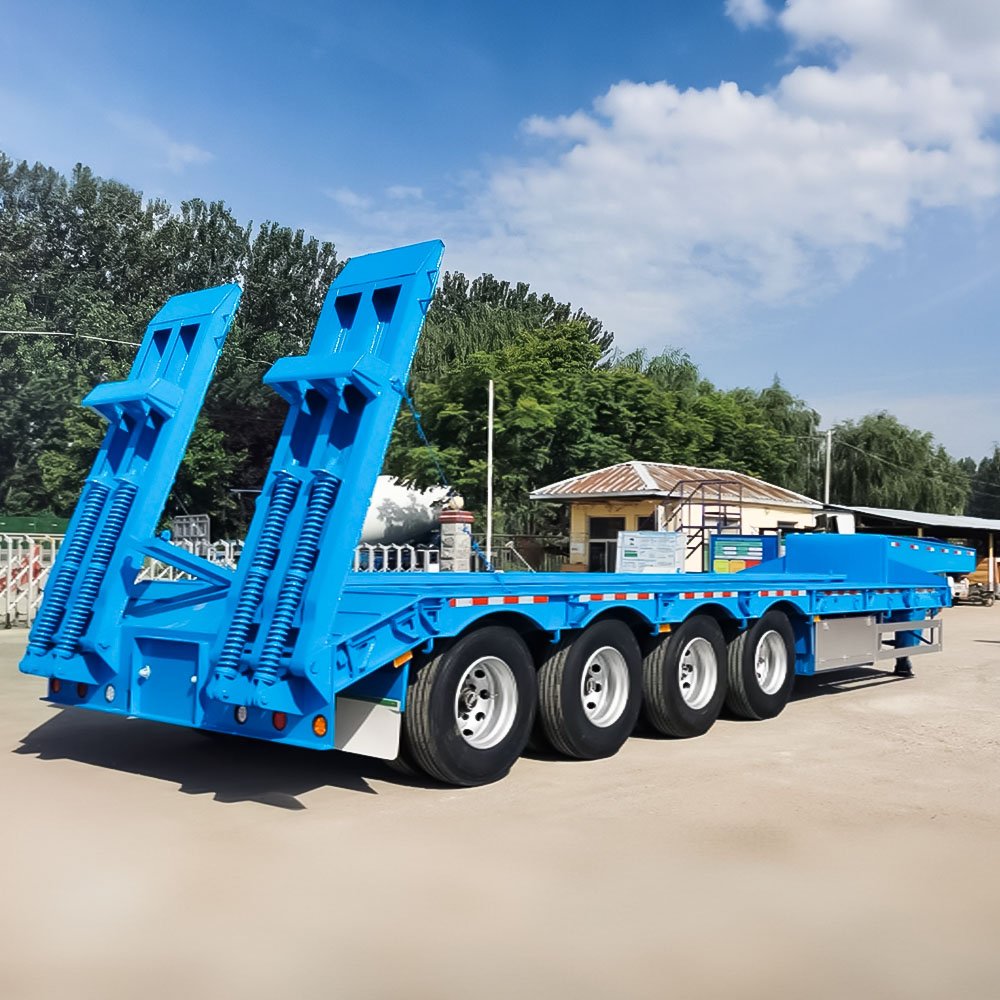
| Lowbed Semi-Trailer | 40–80 tons | Off-road, machinery transport | Every 10–12 weeks |
This table demonstrates how payload range and terrain compatibility influence maintenance scheduling. Operators handling mixed fleets often rotate trailers every 2–3 months to balance wear and extend component life.
Operational Factors and Maintenance Planning
Maintaining an optimal uptime ratio—commonly targeting at least 90%—requires consistent servicing and planned component replacement. Typical wear parts include brake linings, suspension bushings, and tires, which should be checked every 10,000–15,000 km depending on load patterns.
In high-dust mining environments, lubrication intervals of 250–300 operating hours are recommended. Trailer axles and hydraulic tipping cylinders are especially susceptible to fine dust intrusion, which can cause seal degradation if not maintained within this timeframe.
Maintenance planning can be structured into three operational levels:
- Level 1 – Daily Inspections: Visual check of couplings, tires, and lights before each shift.
- Level 2 – Preventive Maintenance: Conducted every 6–8 weeks, including brake calibration, frame tightening, and hydraulic testing.
- Level 3 – Overhaul Maintenance: Comprehensive inspection every 12 months or after 80,000–100,000 km.
Implementing digital tracking for mileage and service intervals enables operators to minimize unscheduled downtime by up to 15–20%. Integrated fleet monitoring systems that record axle temperatures or hydraulic pressure anomalies further enhance safety compliance and predict maintenance needs.
Cost Evaluation and Procurement Decision Framework
Cost evaluation extends beyond initial purchase price. Logistics managers focus on a 3-phase procurement framework: acquisition, operation, and disposal. During acquisition, suppliers usually quote within a price band of USD 28,000–45,000 per semi-trailer, depending on configuration, load rating, and customization requests such as reinforced chassis or specialized rims.
Operational cost over the lifecycle spans fuel consumption, tire usage, and maintenance labor, averaging USD 0.25–0.40 per km. Disposal or resale value depends on structural condition and remaining serviceable components, averaging 25–35% of the initial cost after 5 years of use.
The following table presents a simplified cost comparison among common trailer types:
| Trailer Category | Average Purchase Price (USD) | Estimated Operating Cost per km (USD) | Residual Value after 5 Years |
|---|---|---|---|
| Flatbed | 28,000–35,000 | 0.25–0.30 | 30% |
| Tipper | 35,000–42,000 | 0.30–0.38 | 25% |
| Lowbed | 40,000–45,000 | 0.35–0.40 | 32% |
These figures highlight how upfront investment can influence operational flexibility. Fleet managers often adopt mixed procurement—allocating 60% of investment to workhorse units and 40% to specialized models—optimizing both cost and adaptability.
Frequently Asked Questions: Choosing the Right Semi-Trailers
1. Which semi-trailers are best for deep mining transport?
For deep mining with heavy ore loads exceeding 50 tons, side tipper and lowbed trailers are preferred. They have reinforced chassis and hydraulic discharge systems suitable for gradients up to 15° and unpaved terrain. Operators should verify axle design that supports 13–16 tons per axle.
2. How long does delivery usually take after ordering?
Standard production and delivery cycles range between 6–10 weeks, allowing for specialized specifications such as additional reinforcements or regional homologation checks. Urgent orders with stock models may be fulfilled in as little as 3–4 weeks.
3. What standards should be verified before procurement?
Buyers should ensure compliance with regional and international standards such as ISO safety benchmarks, ECE braking requirements, and load certification according to axle spacing regulations. Documentation verifying welding integrity and anti-corrosion coating thickness (typically 80–120 μm) is also essential for mining conditions.
4. How to control total cost of ownership effectively?
To manage TCO effectively, logistics operators can establish a performance baseline—tracking average repair frequency per 10,000 km and fuel burn per ton–kilometer. Engaging in annual maintenance contracts and optimizing load scheduling can reduce lifetime costs by 10–15% compared with reactive maintenance models.
Why Choose Us for Semi-Trailer Consultation and Customization
Our professional support team assists African fleet operators in confirming technical parameters, selecting appropriate trailer configurations, and planning maintenance strategies that meet terrain and payload requirements. By understanding your transport frequency, average load, and infrastructure environment, we help identify optimized semi-trailer solutions within your budget target.
You can consult us for the following specific needs:
- Technical parameter confirmation for mining-grade semi-trailers
- Customized axle and suspension matching for mixed road conditions
- Estimated delivery cycle and export documentation guidance
- Optional configurations supporting local assembly or CKD supply
- Lifecycle maintenance planning and cost optimization evaluation
Professional consultation ensures each purchase aligns with long-term transport strategy—balancing performance, safety, and sustainability. Contact us to discuss load requirements, configuration options, or to receive a tailored quotation aligned with your operational plan.